Non-Surgical Liposuction: What’s Really Possible
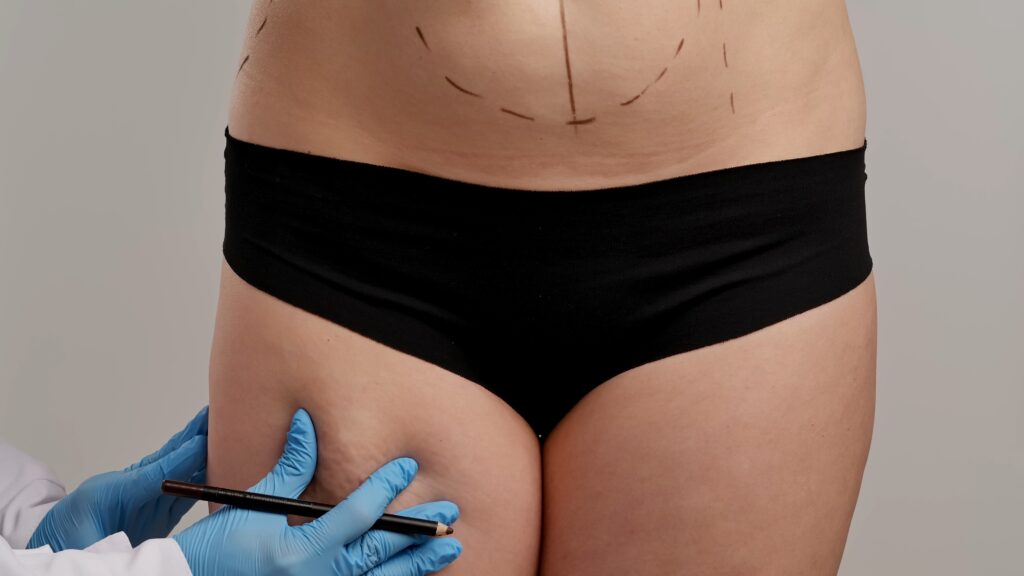
Not every fat deposit can be simply worked away – even if you are active and eat a balanced diet. Small fat pockets, especially in areas like the abdomen, hips, or chin, are often particularly stubborn. Many people therefore look for a solution that does not require surgery.
The good news: There are gentle alternatives to traditional liposuction. The honest answer: These methods have clear limits. In this article, we provide a transparent overview of the non-invasive and minimally invasive options available, what they can achieve, and where their effectiveness ends.
When Is Non-Surgical Liposuction Useful – and When Not?
The key difference lies in the amount and location of the fat tissue.
Smaller, superficial fat deposits – such as a slight double chin or minor fat around the waist or abdomen – can be reduced to some extent with non-invasive methods. However, those seeking to remove larger fat deposits or deeper fat layers will ultimately need surgical liposuction.
A liposuction procedure can remove multiple times the amount of fat achievable with alternative methods. Non-invasive treatments primarily affect the fat directly under the skin, leaving deeper layers largely untouched.
What this means: People with realistic expectations who only want to address small, bothersome areas can achieve good results with the right methods. For those aiming for significant contour changes, honest professional consultation is essential.
Want to know what’s realistically possible for you?
We provide open, honest, and pressure-free advice.
Schedule your consultation now.
The “Fat-Removal Injection”: Gentle, Targeted, and Scalpel-Free
Among the non-surgical fat reduction options, one method stands out: the fat-removal injection, also called lipolytic injection or injection lipolysis.
In this treatment, a substance – usually deoxycholic acid – is injected directly into the fat tissue. The solution dissolves the cell membrane of fat cells. The released fat is then naturally broken down by the body and processed through the liver. The treated area gradually becomes smaller over several weeks.
Who is suitable for the fat-removal injection?
This treatment is ideal for small, localized fat pockets that cannot be reduced through diet or exercise. Typical target areas include:
- Double chin
- Small fat pockets at the waist or hips
- Mild “saddlebag” areas on the outer thighs
- Fat around the knees or inner thighs
Important to know: Multiple sessions are usually required, typically two to four treatments spaced a few weeks apart, as results develop gradually.
What the Fat-Removal Injection Cannot Do
It is not a replacement for surgical liposuction. A surgical procedure can remove approximately 4–8 liters of fat per session, or up to 8% of body weight. Therefore, the injection is not suitable for larger problem areas or extensive fat deposits, where the number of required treatments would be disproportionately high, increasing both risk and cost.
Other Non-Surgical Fat Reduction Options
In addition to injection lipolysis, there are other treatments that work without a scalpel. We will show you which methods are available – and share our professional assessment of them.
Cryolipolysis (CoolSculpting®)
Fat tissue is destroyed through targeted cold. An applicator cools the tissue to a temperature that kills fat cells without harming the skin.
- What it does: Reduces superficial fat after multiple sessions, usually spaced two months apart.
- Our assessment: Multiple sessions are needed, results vary individually, and deeper fat layers are unaffected. Only moderate contour improvement can be expected.
Ultrasound (Liposonix®)
High-intensity focused ultrasound generates heat and cavitation to damage fat cells, penetrating 1–3 cm below the skin.
- What it does: Can reduce waist or hip circumference by 2–4 cm after at least three sessions.
- Our assessment: Less effective than liposuction and limited to superficial fat layers.
Electromagnetic Impulses (Emsculpt®)
Uses high-intensity focused electromagnetic (HIFEM) pulses to trigger strong muscle contractions, which can also reduce fat minimally.
- What it does: Primarily builds muscle, with minimal fat reduction.
- Our assessment: Not suitable for targeted fat removal; better as a complementary body-contouring tool.
Radiofrequency (Thermage FLX®)
Radiofrequency devices generate heat in the tissue and stimulate collagen production. They are primarily used for skin tightening, with minor fat reduction possible as a side effect.
- What it achieves: Gentle skin tightening, with a small degree of fat reduction. Multiple sessions are usually required.
- Our assessment: Not suitable as a fat-removal method, since the primary purpose is skin tightening.
Laser Lipolysis (SculpSure®)
Laser energy is used to heat and destroy fat cells. The effect occurs 0.5 to 2.5 centimeters below the skin. Depending on the procedure, multiple sessions may be required.
- What it achieves: Moderately visible reduction of small fat deposits over several sessions and an extended period.
- Our assessment: Results are similar to cryolipolysis and require considerable effort. For patients with a clear treatment goal, this method rarely provides a convincing added benefit.
Which Method Is Suitable for Whom?
Here is a clear overview:
- Surgical Liposuction: Suitable for larger amounts of fat, both deep and superficial, and for significant contour corrections. Less suitable for individuals who want to avoid surgery.
- Fat-Removal Injection: Ideal for small, clearly defined fat pockets, such as under the chin or around the waist. Less suitable for larger fat deposits or pronounced problem areas.
- Cryolipolysis: Suitable for mild reduction of superficial fat. Less effective for deeper fat or significant contour changes.
- Ultrasound: Can assist with minor circumference reduction but requires patience. Not suitable for rapid or noticeably visible results.
- Electromagnetic Impulses: Optimal for muscle building and body toning. Not primarily intended for targeted fat removal.
- Radiofrequency: Supports skin tightening in cases of minor excess skin. Not a replacement for targeted fat removal.
- Laser Lipolysis: Suitable for smaller fat deposits with moderate expectations. Less suitable for pronounced fat accumulation.
If you are unsure which method best suits your goals, we provide individual, transparent guidance, always tailored to your starting point and personal objectives.
Non-Surgical Liposuction: Our Honest Conclusion
We understand the desire for a solution without surgery. That is exactly why we offer the fat-removal injection: it is the only minimally invasive method we truly believe is effective for clearly defined, small areas.
Other non-surgical methods available on the market, in our view, have too limited effectiveness to be recommended as a real alternative to liposuction. For patients, the effort often outweighs the benefits.
If you want to know which option truly makes sense for your individual case, please contact us. We take the time to listen, provide honest advice, and tailor our recommendations to your needs.
Frequently Asked Questions About Non-Surgical Liposuction
Yes, but only to a limited extent. Minimally invasive procedures, such as the fat-removal injection, can permanently reduce small fat deposits by destroying the treated fat cells. However, new fat cells can form if there is significant weight gain.
Typically, two to four sessions are required, depending on the treatment area and the desired result. The sessions are spaced a few weeks apart.
The injections can cause a mild burning or tight sensation. Swelling and redness in the first few days after treatment are normal and usually resolve on their own.
If you want to remove larger amounts of fat, deeper fat tissue is involved, or you are aiming for significant contour improvements, surgical liposuction is usually the more effective—and ultimately more cost-efficient—solution in terms of results.